

What Makes a Black and White Cowhide Rug Different
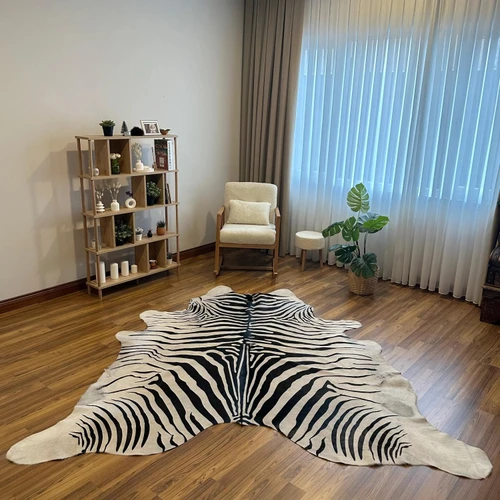
A black and white cowhide rug gets its pattern entirely from the animal's natural coat — no dye, no bleach, and no artificial treatment. The distribution of black and white patches is determined by the genetics of each individual hide.
This is most commonly seen in Holstein and Friesian cattle, which naturally produce the high-contrast two-tone coat. The result on a finished rug is a bold, graphic surface that no factory-made product can replicate exactly.
Because the pattern is biological in origin, every black and white hide is genuinely unique. Two rugs from the same breed can look completely different in how the tones are distributed across the surface.
Hair-On Construction — What You Are Actually Buying
The surface you walk on is the natural hair of the animal's coat, preserved through the tanning process. It sits close and flat — not shaggy or loose — making it practical for daily floor use.
The underside is firm tanned leather. It provides structural stability on hard floors without curling or shifting. Most cowhide rugs do not require a non-slip rug pad on smooth flooring, though one can be added if preferred.
Our hides are produced in our own leather tannery in Pakistan. Every rug comes from halal-certified cowhide. There is no synthetic backing, no foam base, and no bonded leather construction at any point in production.
How a Black Cowhide Rug Works in a Living Room
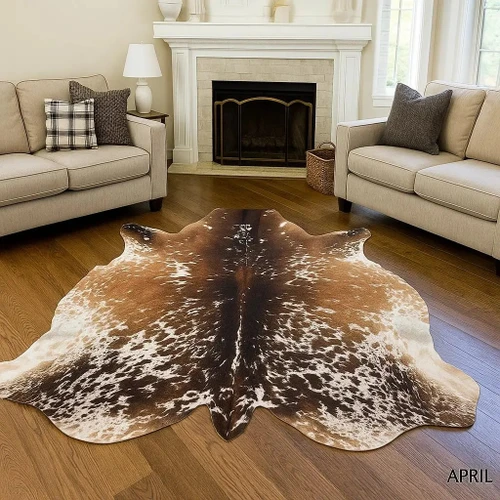
A black cowhide rug in a living room functions as a visual anchor beneath a sofa or coffee table arrangement. The dark tones ground the seating area without making the room feel heavy.
The white areas in the pattern reflect ambient light, keeping the floor surface open even in lower-lit spaces. This balance between the two tones is one reason the black and white pattern suits such a wide range of interior styles.
It works in contemporary, Scandinavian, monochrome, and modern farmhouse settings equally well. In more minimal spaces, the pattern introduces organic texture. In bolder rooms, the natural variation keeps it from competing with other design elements.
Real Cowhide vs Faux — Why It Matters for This Pattern
The black and white cowhide pattern is one of the most widely copied in synthetic rugs. Faux cowhide rugs in this pattern use printed polyester or acrylic fibre on a textile base. The pattern is uniform and identical across every unit produced.
A genuine black and white cowhide rug looks different because the pattern is organic — the boundaries between tones are soft, irregular, and biologically determined. A faux rug shows hard-edged, repeating printed shapes. The difference is visible immediately at close range.
The durability difference is even more significant. A real leather-backed hide resists surface wear, does not shed fibres, and does not degrade in the way synthetic backing materials do under regular foot traffic.
Sizing, Placement, and Interior Use
Black and white cowhide rugs are available in full natural hide shapes — typically 5x7 up to 8x10 feet depending on the individual animal. The organic shape of the hide means edges are not perfectly straight. This is a characteristic of genuine cowhide, not a defect.
In a dining room, the rug should extend at least 24 inches beyond all sides of the table. This keeps dining chairs on the rug surface when pulled out for seating. In an open-plan space, the natural shape defines areas without the rigidity of a rectangular rug.
Cleaning and Long-Term Care
Vacuum with a soft brush attachment on a low setting. Always move in the direction of the hair — vacuuming against the grain can loosen hair from the hide over time.
For liquid spills, blot immediately with a clean, dry cloth. Do not rub the surface. Rubbing spreads the liquid laterally and pushes it deeper into the hair. Allow the affected area to air dry completely before use.
Do not machine wash, tumble dry, or steam clean. Heat and prolonged moisture can cause the leather backing to warp and the hair to separate from the hide surface.