

Understanding the Brindle Pattern
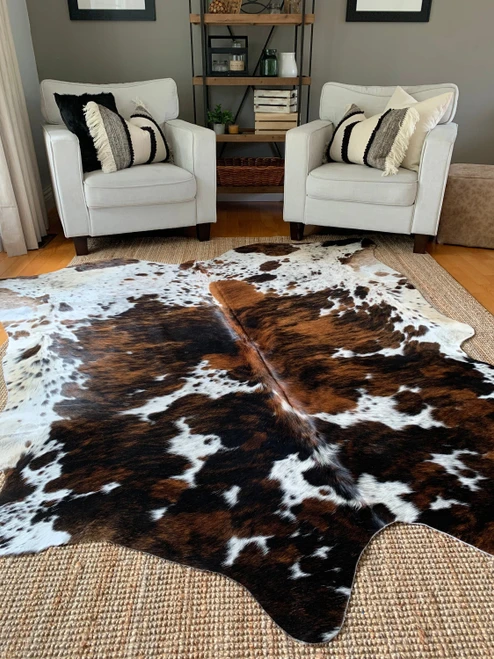
Brindle is a naturally occurring coat pattern in cattle. It appears as irregular streaks and blended overlaps of brown, black, tan, and sometimes rust — layered across the hide in a way that resembles hand-painted brushwork.
Unlike a printed or dyed pattern, brindle colouring is genetic. It occurs in the hair follicles themselves. The tanning process preserves those colours exactly as they existed on the living animal. Nothing is added, and nothing is removed.
Every brindle hide is different. The density of streaking, the ratio of dark to light areas, and the overall warmth of the tone vary from animal to animal. Two brindle rugs listed as the same type will always look distinct from one another.
Brown and White Cowhide — Natural Variation Within the Range
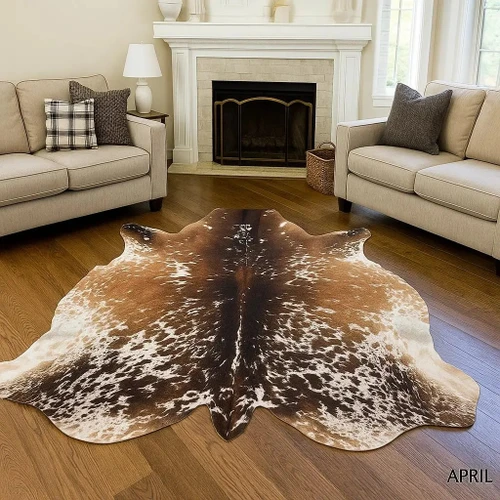
Some brindle hides carry heavier white coverage alongside the brown. These are often described as brown and white cowhide rugs. The contrast is softer and more organic than a black and white hide — the tonal boundary between areas is blended rather than sharp.
Other brindle hides sit at the warmer, darker end of the range — more deep brown and rust, with minimal light patches. These produce a richer, moodier floor piece suited to rooms with darker wall colours or heavier furniture.
All hides in our brindle range are undyed. What you see on the surface is the animal's original coat colour preserved through tanning — not a colour applied during finishing.
Construction — Tannery to Floor
Each brindle rug is produced as a full single hide. The hair-on surface is tanned flat and dried under tension to ensure the finished rug lies evenly on the floor. The tanned leather reverse provides structural integrity without any synthetic support layer.
We produce every hide in our own tannery in Pakistan from halal-certified cattle. We do not source hides from third-party processors. The full production chain — from raw hide to finished rug — is carried out in our own facility.
This direct process is what allows us to offer tannery-direct pricing without the markup that comes from sourcing through leather merchants or wholesale intermediaries.
Interior Styling — Where Brindle Works Best
The warm earth tones of a brindle cowhide rug complement rustic, bohemian, traditional, and ranch-style interiors most naturally. The streaked pattern adds visual texture to rooms built around natural materials — wood, stone, linen, leather, and rattan.
In contemporary spaces, a brindle rug introduces warmth without disrupting a modern aesthetic. It works particularly well against pale oak flooring, exposed brick, and neutral upholstery in warm white or greige tones.
It pairs strongly with terracotta, dark green, and ochre accents. In a room with a more neutral base, brindle acts as the natural warmth anchor that prevents the space from feeling flat or cold.
Durability and Long-Term Performance
Cowhide is naturally resistant to surface wear. The short, flat hair structure of a brindle hide does not mat down or develop worn tracks in the way a woven or cut-pile rug would under regular foot traffic.
The leather backing does not stretch, crack, or delaminate with normal floor use. Provided the rug is kept dry and away from sustained moisture, a genuine brindle cowhide rug will hold its appearance for many years without professional maintenance.
Care and Maintenance
Vacuum with a soft brush attachment, always moving in the direction of the hair. Take the rug outside periodically and shake to remove dust settled deep in the hair pile. This is more effective than vacuuming alone for heavier dust accumulation.
Blot liquid spills immediately with a dry cloth. Do not rub. For surface marks, wipe gently with a damp cloth and a small amount of mild soap, then allow to air dry flat away from direct heat or sunlight.