

What Genuine Cowhide Actually Means
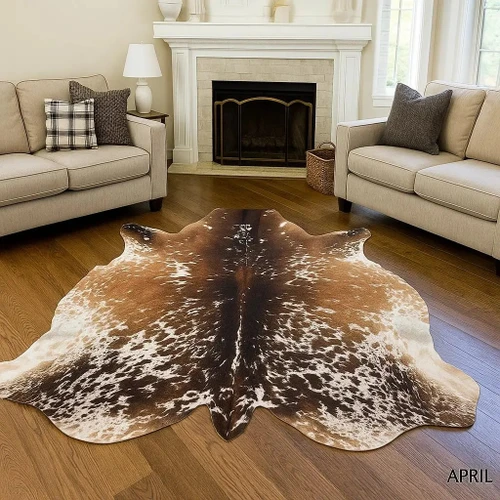
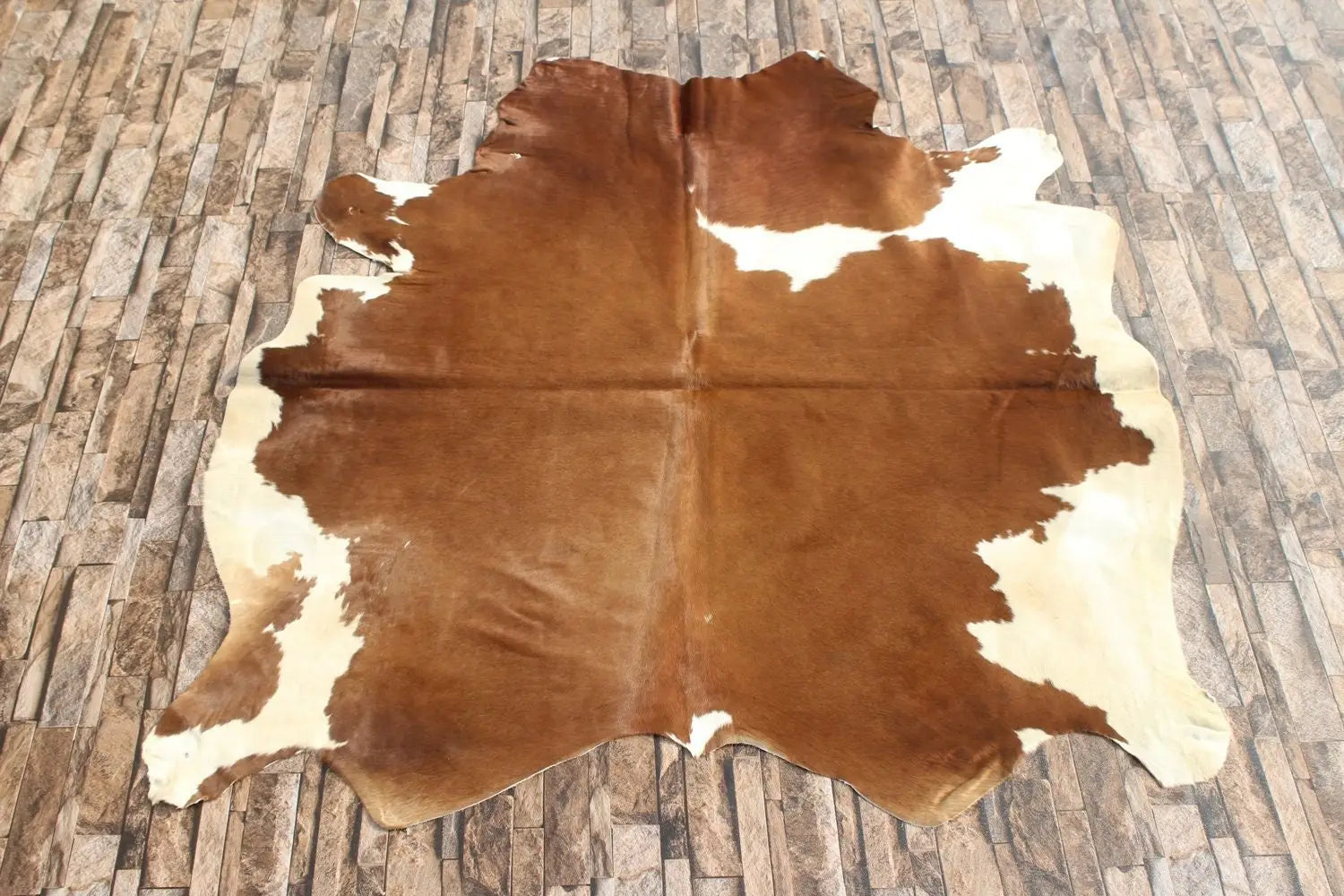
A genuine cowhide rug is made from the real skin of a cow. The natural hair is preserved intact on the top surface. The underside is tanned leather — firm, flat, and stable on the floor. Both surfaces are animal-derived. There is nothing synthetic in the construction.
The word "genuine" distinguishes this product from two categories of imitation: faux cowhide rugs, which use polyester or acrylic fibres on a textile base, and bonded leather rugs, which use shredded leather offcuts mixed with synthetic binders pressed onto a backing — not a whole, intact hide.
A genuine cowhide rug is a whole animal skin processed as a single piece. The natural shape, hair pattern, and structural properties of the hide are all present in the finished rug. Imitation products can replicate none of these properties.
How to Tell If a Cowhide Rug Is Real
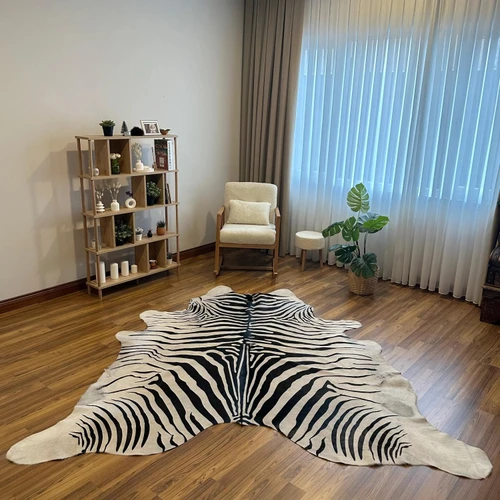
The most reliable indicator is shape. A genuine cowhide rug has an organic, irregular outline — wider across the back and flanks, narrowing toward the head and legs. It is not a perfect rectangle or oval. If a cowhide rug has perfectly straight edges, it has been cut to shape, not presented as a natural hide.
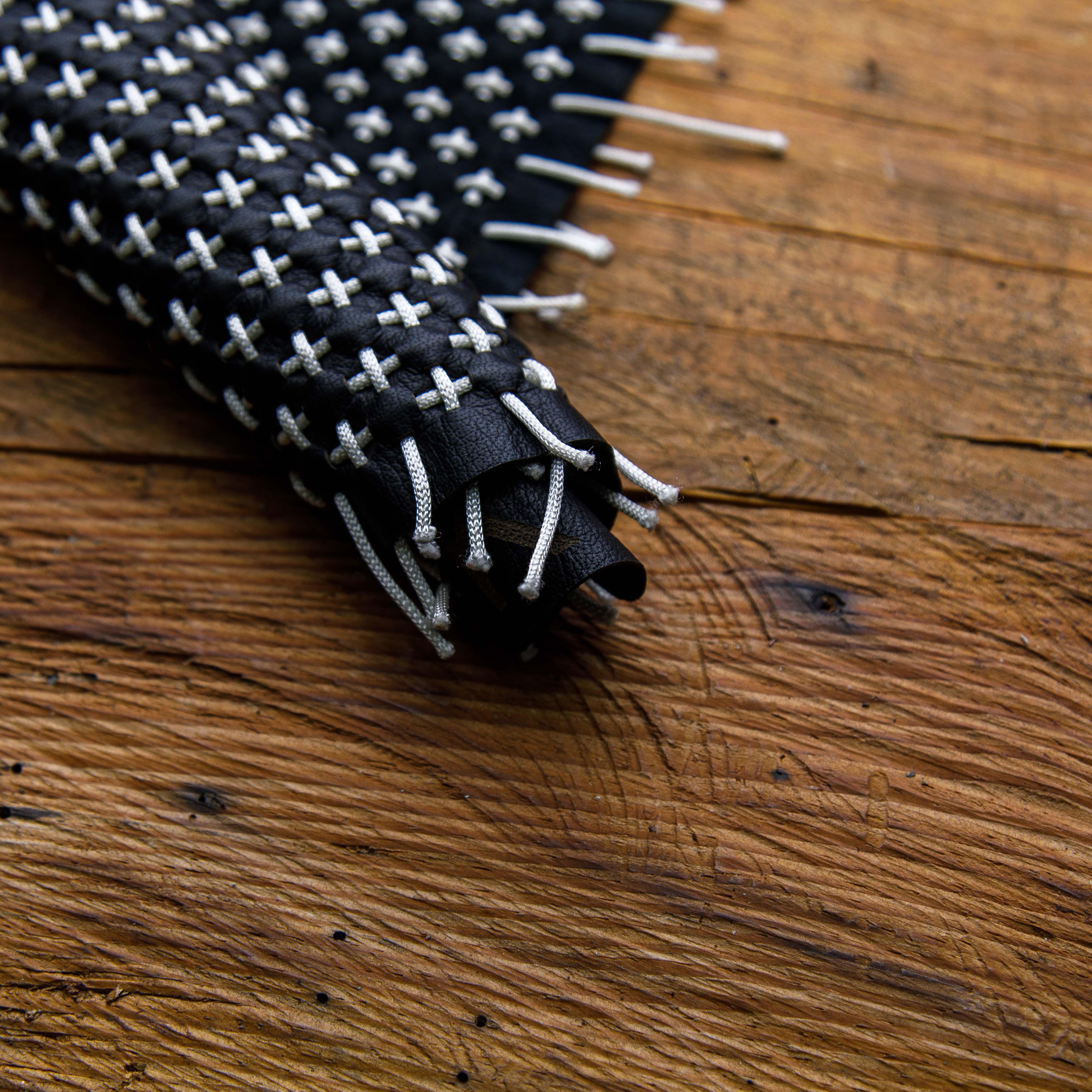
The second indicator is the leather reverse. Turn the rug over. A genuine cowhide has a firm, smooth tanned leather underside. It has a natural colour — typically tan, pale brown, or warm beige — and a slightly matte finish. A faux rug has a soft textile, foam, or synthetic base. The difference is immediately apparent by touch.
The third indicator is hair behaviour. On a genuine hide, the hair is dense and lies flat. It does not feel like carpet fibre. Run a hand through it — it should feel similar to a short-haired dog's coat, not like synthetic pile. Individual hair strands are visible at close range. A faux rug feels softer, more uniform, and distinctly artificial to the touch.
Brazilian Cowhide — What the Standard Actually Refers To
Brazilian cowhide rugs have long been regarded as a quality benchmark in the market. The reason is not geographic — it is related to processing standards, hide selection practices, and the tanning methods developed and refined in Brazil over several decades.
The specific characteristics associated with Brazilian cowhide quality include: consistent hair coverage, firm leather backing, flat-lying surface, and durable finish. These are achievable through quality-focused tanning wherever the facility is located.
We produce our hides in our own tannery in Pakistan to the same process standards. Our hide selection criteria, tanning method, and finishing process are calibrated to meet the same quality benchmark. The result is a genuine cowhide rug that performs the same way, at a direct-tannery price.
Our Tannery — Why It Matters for Quality
We are a leather tannery, not a rug retailer. We do not buy finished rugs from third-party manufacturers and resell them. Every hide sold through Leather Hub is processed in our own facility, by our own team, to our own quality standard.
This means we control every stage of production — hide selection from halal-certified livestock, wet processing, tanning chemistry, drying and flattening, finishing, and quality inspection. No external processor is involved at any point.
The direct-tannery model removes every intermediary between production and sale. The pricing reflects that removal — you are buying at tannery cost, not at the markup that accumulates as a hide moves from tannery to leather merchant to importer to retailer.
Durability and Long-Term Value
A genuine cowhide rug, properly maintained, has a lifespan measured in decades rather than years. The leather backing does not delaminate, crack, or deteriorate under normal indoor conditions. The hair surface does not shed, mat, or develop worn patches under regular foot traffic.
Faux cowhide rugs typically show visible degradation within two to five years under normal use. Synthetic fibres mat down, backing materials separate, and printed patterns fade. A genuine hide ages differently — it develops a natural patina that often improves rather than diminishes its appearance over time.
Genuine cowhide is also a biodegradable natural material. It is a by-product of the halal meat industry, not a purpose-raised product. Faux cowhide is petroleum-based and contributes to synthetic textile waste in ways that genuine leather does not.
Care Instructions
Vacuum with a soft brush attachment in the direction of the hair. Spot clean spills immediately — blot firmly with a dry cloth and allow to air dry flat. Keep away from sustained direct sunlight to preserve the natural hair colour over time. Do not machine wash or steam clean under any circumstances.