
Woven leather is genuine leather that has been cut into thin strips and interlaced — by hand or machine — into a textured, flexible surface. It is real leather, not a synthetic. When made from full-grain or top-grain hides, woven leather is more scratch-resistant than smooth leather, offers natural micro-elasticity, and can last 10–20+ years with proper care.
From high-end handbags to belts, shoes, and furniture upholstery, woven leather has been part of luxury craftsmanship for centuries. But beyond its distinctive look, buyers increasingly want to know: how does woven leather actually compare to smooth leather in terms of durability, care, and everyday value? This guide covers everything — definition, manufacturing process, Intrecciato technique, a full woven vs smooth leather comparison, and how to choose the right hide for your project.
What Is Woven Leather? (Definition & Quick Answer)
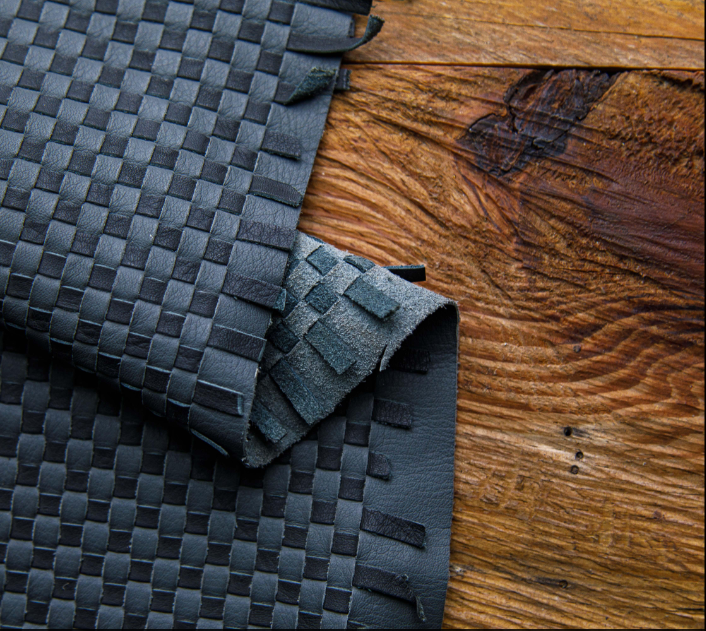
Woven leather is a form of leather construction where the hide is first cut into long, uniform strips — typically 3mm to 10mm wide — which are then interlaced vertically and horizontally (or in diagonal/diagonal patterns) to form a unified surface.
This is not a coating, embossing, or printing technique. The weave is structural. Each strip is real leather, which means the final product inherits the strength, patina development, and aging characteristics of genuine hide — plus the additional benefits that come from the interlaced structure itself.
Woven leather is most commonly found in:
-
Handbags and totes (especially luxury and artisan bags)
-
Belts and watchbands
-
Loafers, moccasins, and dress shoes
-
Wallets and cardholders
-
Furniture upholstery and accent panels
How Woven Leather Is Made: Handwoven vs Machine-Woven
Not all woven leather is made the same way. The technique affects the texture, consistency, and price of the final product.
Traditional Handwoven Technique
A skilled artisan manually cuts the leather into uniform strips and interlaces them by hand. This requires precision — the strips must maintain consistent tension and alignment throughout the weave. Even minor variation in strip width or pulling pressure affects the pattern's symmetry. Two handwoven pieces made by the same artisan from the same hide will never be identical, which is exactly why handwoven leather commands premium pricing in the luxury market.
Modern Machine-Woven Technique
Industrial looms weave pre-cut leather strips at scale, producing consistent patterns efficiently. Machine weaving is used for mid-range products and high-volume orders. While it lacks the subtle uniqueness of handwoven pieces, quality machine-woven leather — when made from premium hides — is durable, consistent, and visually refined.
What Is Intrecciato? (Italian Woven Leather Explained)
Intrecciato (pronounced in-treh-CHA-toh) is the most prestigious woven leather technique, made famous by the Italian luxury house Bottega Veneta. The word means 'interwoven' in Italian.
In Intrecciato construction, leather is cut into very fine 'fettuccine-style' strips and woven through a slotted base sheet or on a specialized loom. The result is a double-layered structure: two layers of full-grain leather overlapping at every intersection. This gives Intrecciato bags their characteristic soft weight, natural drape, and exceptional scratch camouflage — surface marks visually disappear into the complex 3D texture.
Intrecciato typically requires 1.5x to 2x more leather than an equivalent solid bag, which explains both its cost and its durability. When made from Nappa (sheepskin) or calfskin, the strips remain pliable enough to weave without cracking.
|
Shopping tip: If you see a 'woven leather' bag at a very low price, inspect it carefully. Many budget products use embossed PU leather — a synthetic material stamped with a grid pattern to mimic the look of woven leather. Always check the material label. Real woven leather has visible strip edges on the reverse side. |
Woven Leather vs Smooth Leather: Full Durability Comparison
This is the question driving most of this blog's search traffic. Here is a detailed, category-by-category breakdown:
Scratch Resistance
Woven leather wins clearly here. On a smooth leather surface — especially polished finishes like Box Calf — a single scratch is immediately visible against the uniform surface. On a woven leather surface, the complex 3D texture visually absorbs and camouflages scratches. Scuffs blend into the interlacing pattern and become virtually invisible. This is one of the primary practical advantages of woven construction for everyday bags.
Load Capacity & Structural Strength
Smooth full-grain leather has a slight edge for very heavy loads. A single continuous panel of full-grain hide distributes weight evenly across the entire surface with no structural weak points. Standard woven leather, where the strips rest under tension rather than being fused, can experience slight stretching at stress points over time. However, high-quality Intrecciato woven leather (double-layered construction) can actually exceed solid leather in tensile strength due to the overlapping fiber structure.
Moisture & Water Resistance
Smooth leather has a slight advantage here. A solid leather panel has no gaps — water beads on the surface and can be wiped away. Woven leather has open spaces between the strips where moisture can penetrate more easily. This is not a major concern for occasional exposure, but woven leather bags should be conditioned regularly and kept out of heavy rain. In both cases, conditioning with a quality leather balm significantly improves water resistance.
Repairability & Longevity
Both are repairable, but in different ways. Smooth leather can be restitched, dyed, and patched by a skilled cobbler. Woven leather is harder to repair structurally if an individual strip breaks or comes loose — but the good news is that because the surface is visually complex, minor damage is far less noticeable than on a smooth surface. Both types, when made from full-grain leather, can last 10–20+ years with proper care.
|
Feature |
Woven Leather |
Smooth Full-Grain Leather |
|
Scratch Resistance |
Excellent (texture camouflages scuffs) |
Moderate (scratches highly visible) |
|
Load Capacity |
High (very high for Intrecciato) |
Very High (solid panel structure) |
|
Moisture Resistance |
Moderate (open weave gaps) |
High (no gaps, wipeable surface) |
|
Repairability |
Moderate (strip repair is complex) |
High (stitching, patching, dyeing) |
|
Lifespan (quality hide) |
10–20+ years |
20+ years |
|
Ageing Appearance |
Graceful (scratches invisible in weave) |
Develops rich patina |
|
Weight |
Heavier (more leather used) |
Lighter (single panel) |
|
Cost |
Higher (labor + leather yield) |
Lower (less waste, faster to make) |
|
Best Use |
Handbags, accessories, dress shoes |
Work bags, totes, furniture |
Is Woven Leather Good for Everyday Use? (Pros & Cons)
Pros of Woven Leather
-
Scratch camouflage: Surface marks blend into the weave pattern — makes it very forgiving for daily use
-
Micro-elasticity: The woven structure has natural flex, preventing the stiff creasing that affects solid leather
-
Breathability: The open weave allows slight air circulation — more comfortable in warm conditions
-
Unique appearance: No two handwoven pieces are identical; artisan appeal with clear craftsmanship value
-
Timeless style: Does not read as 'trendy' — woven leather has been in high fashion for decades
Cons of Woven Leather
-
Higher cost: Requires more leather (especially Intrecciato) and significantly more labor than smooth leather
-
Heavier weight: More leather per square foot means heavier bags — noticeable with Intrecciato styles
-
Moisture vulnerability: Open weave gaps make it slightly more susceptible to water penetration
-
Structural repair complexity: Replacing a broken strip is more difficult than patching smooth leather
-
Dirt trapping: The weave crevices can trap small particles of dust and grit over time — needs periodic cleaning
Are Woven Leather Bags Still in Style?
Yes — and not just trending, but enduringly established. Woven leather is one of the few design languages in luxury accessories that has not come and gone with seasonal trends. Bottega Veneta brought Intrecciato into global consciousness in the 1960s and it remains one of the most recognized luxury signatures today. During the brand's revival under Daniel Lee (2018–2021), Intrecciato woven leather experienced a sharp resurgence in mainstream fashion coverage — but it never actually disappeared in the years before that.
The broader category of woven leather — from artisan belts to moccasins to summer totes — moves with the market but never falls out of relevance. It occupies the same permanent category as raw denim or Oxford shoes: classic craft with ongoing cultural currency.
For autumn/fall specifically, woven leather bags in earthy tones (tan, cognac, forest green, dark chocolate) align perfectly with the season's palette and texture preferences — which is why search interest in 'are woven leather bags in style' spikes every autumn.
Woven Leather Uses: Bags, Belts, Shoes & Furniture
Woven leather is used across a wide range of products, each benefiting from the technique in different ways:
|
Product |
Why Woven Leather Works Well |
Recommended Hide |
|
Handbags & Totes |
Scratch camouflage, flex structure, artisanal look |
Nappa (sheepskin) or Calfskin |
|
Belts |
Durability, breathability, classic aesthetic |
Full-grain goatskin or cowhide |
|
Loafers & Moccasins |
Breathability in warm weather, comfortable flex |
Soft calfskin or deer leather |
|
Wallets |
Slim profile, unique texture, durability |
Top-grain cowhide |
|
Watch Straps |
Flex, breathability against skin, stylish |
Nappa or calfskin |
|
Furniture Upholstery |
Adds tactile texture, hides wear over time |
Heavy full-grain cowhide or buffalo |
|
Automobile Interiors |
Luxury feel, scratch resistance, durability |
Full-grain cowhide |
How to Care for Woven Leather
Woven leather care is slightly more involved than smooth leather due to the crevices between strips. Follow these steps:
-
Clean with a soft, slightly damp cloth. Wipe gently along the weave direction to remove surface dust. Avoid brushes or abrasives that can catch on strip edges.
-
Use a soft-bristle brush (like a clean toothbrush) periodically to dislodge dirt or grit from the weave gaps — do this before conditioning.
-
Condition every 3–6 months with a quality leather balm or cream. Apply with a soft cloth and work it gently into the weave. This replenishes natural oils in every strip and prevents brittleness.
-
Avoid extended moisture exposure. If the bag gets wet, blot (do not rub) with a clean cloth and allow to air-dry at room temperature away from direct heat.
-
Store in a dust bag away from direct sunlight. UV exposure can fade the leather and dry out the strips over time.
|
Care tip from experience: For stubborn grime in weave crevices, a slightly damp cotton swab worked along the gaps is more effective than any spray cleaner — and far less likely to cause water damage. |
Where to Buy Woven Leather Hides (Wholesale & Retail)
If you are crafting woven leather products yourself, you need hides that are thin and pliable enough to cut into strips without cracking during the weaving process. The right hide choice depends on the product:
-
Bags and accessories: Nappa (sheepskin) between 0.8mm–1.2mm thickness — soft and flexible, ideal for tight weave patterns
-
Belts and shoes: Full-grain goatskin or cowhide at 1.2mm–1.5mm — firmer weave with better structure
-
Furniture panels: Heavy full-grain cowhide or buffalo hide — you need structural integrity for repeated stress
At eLeatherHub, we stock premium wholesale and retail leather hides suitable for woven leather work — including goatskin, cowhide, and embossed hides in a range of thicknesses. Browse our full collection at eleatherhub or contact us for custom cutting requirements.
FAQs About Woven Leather
Q: What is woven leather?
Woven leather is genuine leather cut into thin strips and interlaced — by hand or machine — into a textured, flexible surface. It is real leather, not a synthetic. The weave is structural, meaning the strips form the actual material rather than being a surface treatment applied to flat leather.
Q: Is woven leather more durable than smooth leather?
It depends on what you mean by durable. Woven leather is significantly more scratch-resistant than smooth leather because the textured surface camouflages scuffs. However, solid full-grain leather has better moisture resistance and is easier to repair structurally. High-quality Intrecciato woven leather (double-layered construction) can actually exceed smooth leather in tensile strength. For most everyday use cases — especially bags — woven leather performs very well and can last 10–20+ years.
Q: Are woven leather bags a good investment?
Yes, when made from genuine full-grain or top-grain leather. A quality woven leather bag resists surface scratches, develops character over time, and can outlast cheaper smooth leather alternatives that use corrected-grain or bonded leather. The key is the hide quality, not just the weaving technique. Look for bags specifying full-grain or Nappa leather construction, and avoid anything that doesn't disclose the leather type.
Q: Is woven leather easier to care for than smooth leather?
In one important way, yes: surface marks and scratches are far less visible on woven leather than smooth leather, which means it looks presentable with less frequent polishing. However, the weave crevices require periodic cleaning with a soft brush to remove trapped dust. Overall maintenance is similar — conditioning every 3–6 months and avoiding prolonged moisture exposure applies to both.
Q: How is woven leather made for high-end designer handbags?
The premium standard is Intrecciato — thin strips of Nappa or calfskin are laser-cut to precise widths and hand-woven through a slotted base sheet. Each strip edge is burnished or edge-painted before weaving to prevent fraying over years of use. This process requires 1.5–2x more leather than a solid bag and takes an experienced artisan 1–2 days per piece — which explains the significant price premium of luxury woven leather bags.
Q: Does woven leather stretch more than smooth leather?
Standard woven leather has slightly more flex than a solid hide panel due to the natural micro-elasticity of the interlaced structure — the individual strips can shift slightly under load. This flex is actually a benefit for bags and shoes. However, it does not stretch in the sense of deforming permanently under normal use. Intrecciato construction (double layers) is particularly resistant to permanent stretching.
Q: Is a woven leather bag suitable as a first luxury purchase?
Yes — and often recommended. Woven leather bags, especially Intrecciato styles, wear exceptionally well. The scratch camouflage means they still look pristine after years of daily use that would visibly mark a smooth leather surface. They are also highly versatile — they transition from casual to formal, from summer to winter. The main consideration is weight: woven leather bags are heavier than equivalent smooth leather bags due to the greater leather volume. If weight is a concern, choose a smaller form factor.