

Black Laser Cut Synthetic Flower Pattern Leather

Brown Flower Pattern Laser Cut Leather
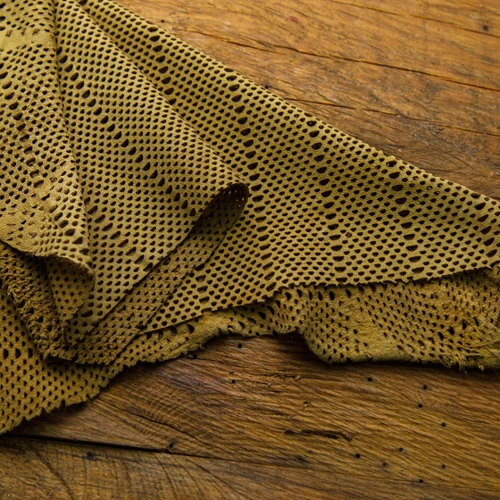
Brown Jali Pattern Laser Cut Leather Skin
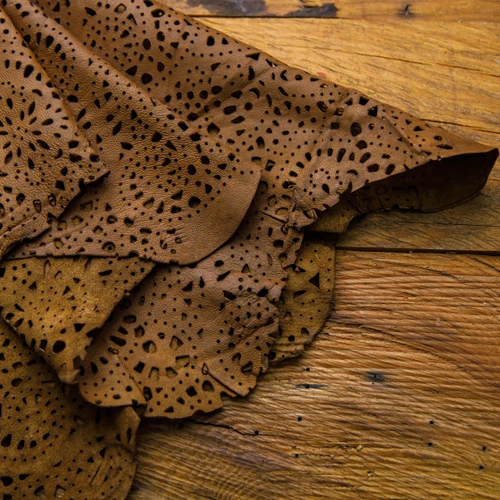
Chocolate Brown Floral Laser Cut Leather
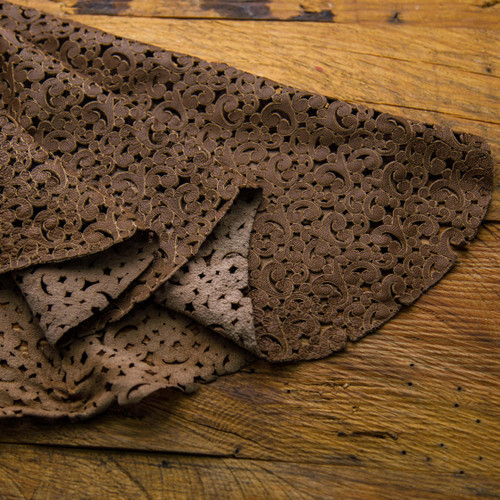
Chocolate Brown Flower Pattern Laser Cut Leather

Dark Blue Laser Cut Leather with Plumeria Flower Pattern
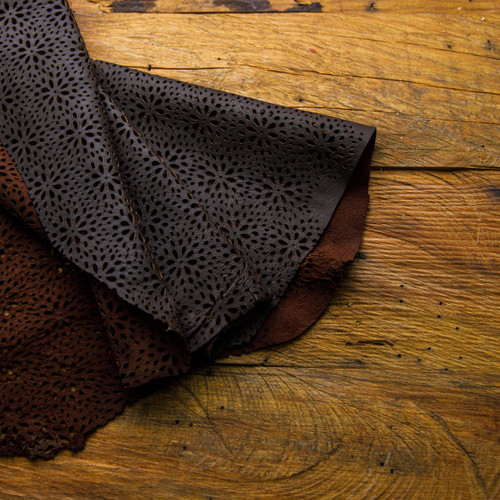
Dark Brown Laser Cut Leather Hide
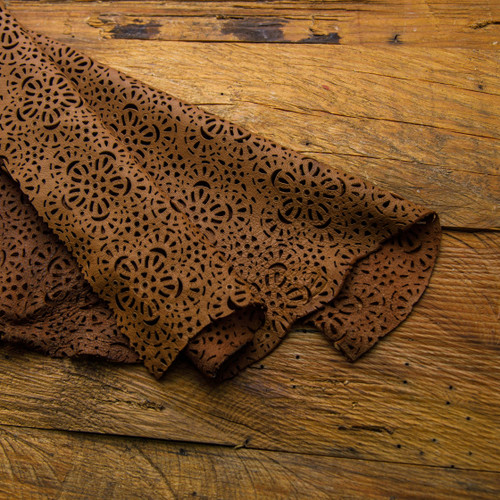
Dark Brown Nigella Flower cut Leather
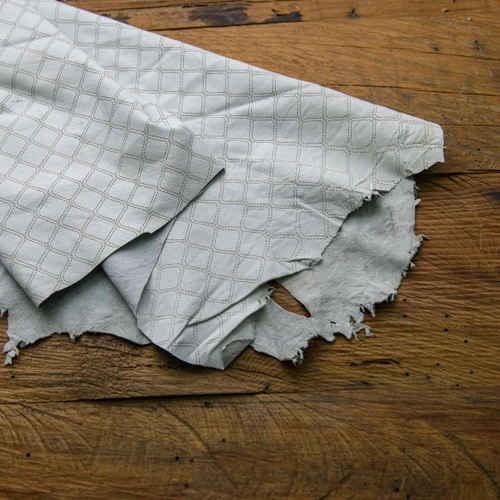
Double Line Square Cube Embroidered Leather

Gray Laser Cut Fish Pattern Leather

Green Plumeria Flower Cut Leather

Laser Cut Sky Blue Cowhide Leather

Laser Embossed Buffalo Leather - Off-White Flower | eLeatherHub

Light Brown Flower Pattern Laser Cut Leather
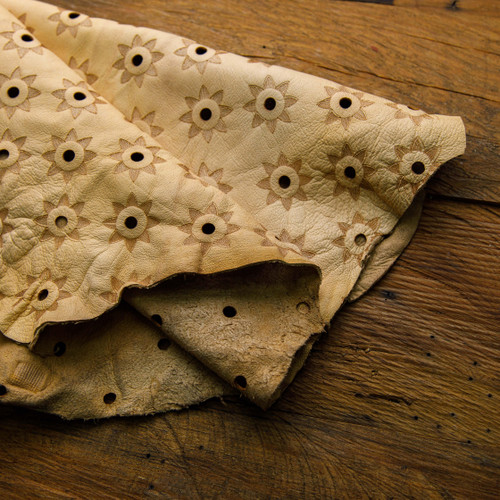
Light Brown Flower Pattern Laser Cut Leather Sheet
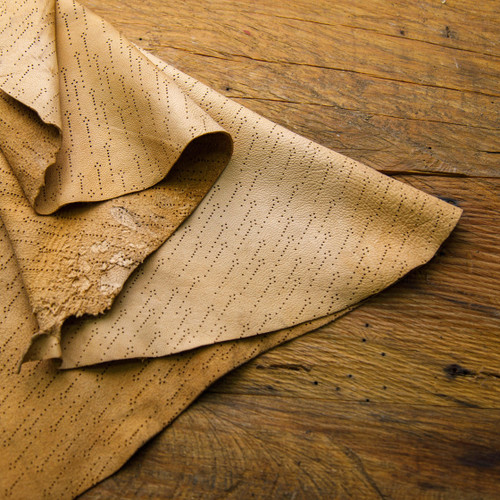
Light Brown Laser Cut Arrow Pattern Hide

Light Brown Laser Cut Flower Pattern Leather

Light Brown Laser Cut Snake Pattern Leather

Luxurious Light Brown Laser Cut Leather Hide

Maroon Flower Pattern Laser Cut Hide
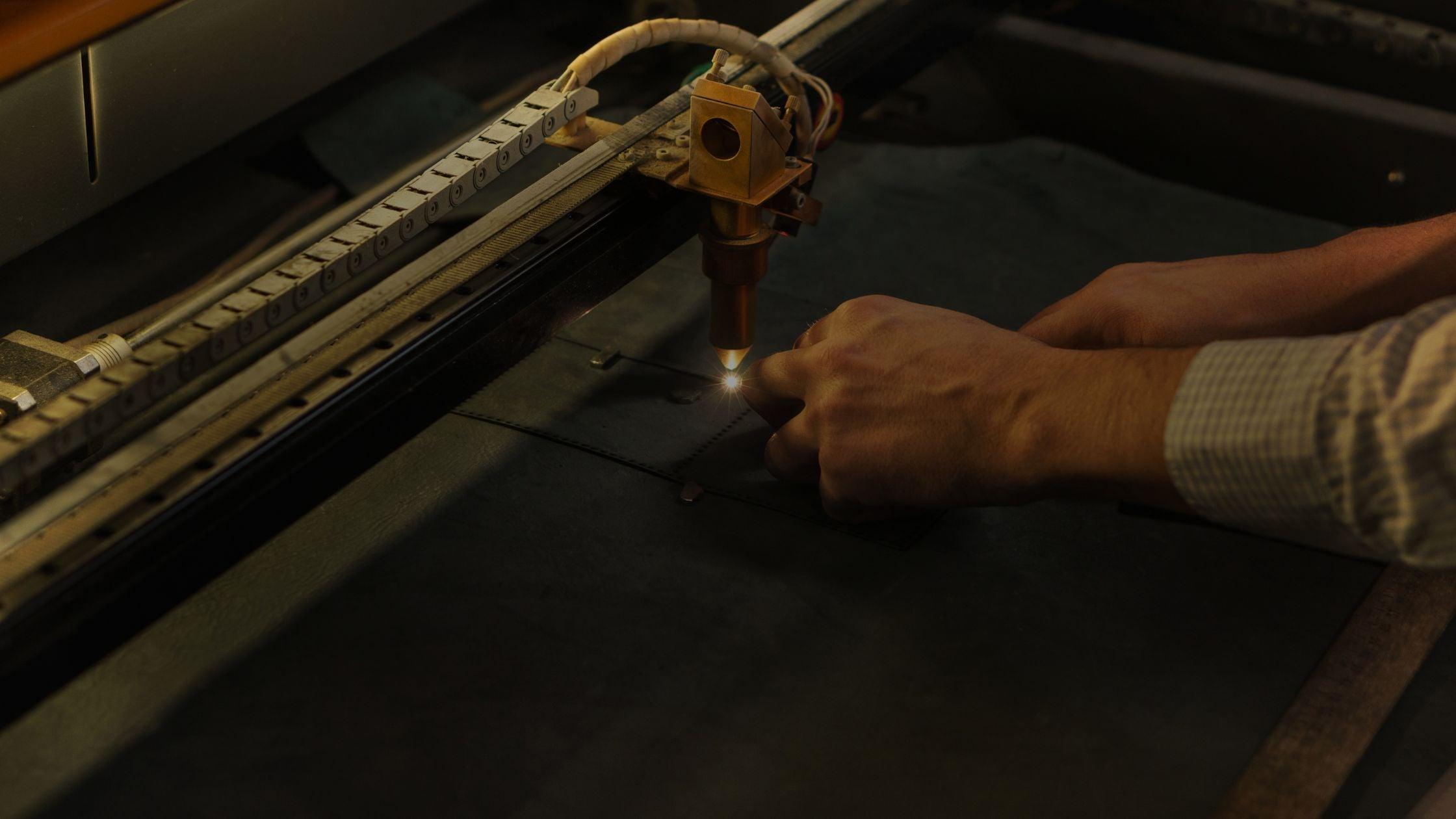
At Leather Hub, we produce laser cut and laser engraved leather hides using precision CNC laser machines that cut or engrave intricate patterns directly into genuine cowhide and buffalo hide. Every hide in this collection is produced from halal-certified animal leather in our own facility in Pakistan — real leather, not synthetic, not bonded — then processed through our laser cutting system to create detailed floral, geometric, fish scale, arrow, and architectural patterns with clean edges and consistent depth.
We carry 20 distinct laser cut leather patterns in stock, ready to ship immediately at wholesale and retail pricing. From classic floral designs to the distinctive Jali lattice pattern to Plumeria and Nigella botanicals — our pattern range goes well beyond the standard laser cut leather available from most suppliers.
What is Laser Cut Leather?
Laser cut leather — also called laser engraved leather or laser cut-engraved leather — is genuine leather that has been processed using a computer-controlled CNC laser machine. The laser either cuts all the way through the leather to create openwork (cut-through) or removes the top layer of the leather surface to engrave a pattern without piercing through (engraving). Both techniques create highly detailed, precise patterns that cannot be achieved by hand cutting or mechanical stamping.
The process requires genuine, real leather — not synthetic or vinyl. Synthetic materials can melt or deform under the laser heat, produce toxic fumes, and do not produce clean pattern edges. Our laser cut leather hides are made from genuine cowhide and buffalo hide, which respond cleanly to laser processing and produce crisp, sealed edge cuts.
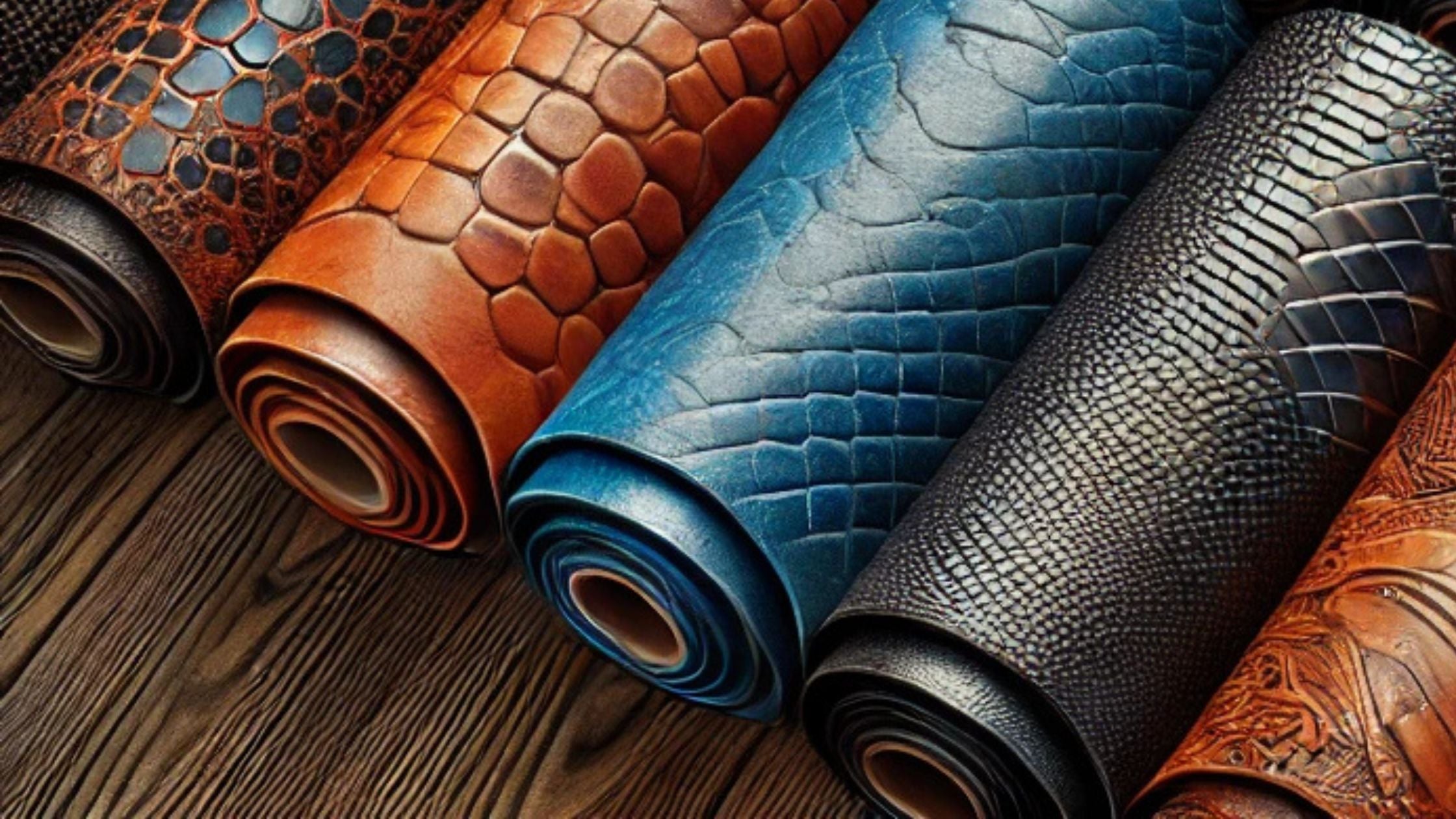
Laser cut leather differs from embossed leather: embossed leather has a pattern pressed into its surface using a heated plate — the pattern is three-dimensional but the leather remains solid. Laser cut leather has material physically removed by the laser, creating holes, slots, or engraved channels in the surface.
Laser Cut Leather Patterns — Full Pattern Guide
We carry more named, distinct laser cut leather patterns than any of our competitors. Here is a guide to the full range:
Floral & Botanical Laser Cut Patterns
Our most-stocked category. Floral laser cut leather includes repeating flower motifs in various scales and styles:
-
Standard flower pattern: symmetrical flower head repeats in brown, chocolate, light brown, maroon, and sky blue
-
Plumeria (Frangipani) pattern: the distinctive five-petal tropical flower. Available in dark blue and green. Plumeria is a recognizable motif in Asian and Hawaiian design traditions.
-
Nigella flower pattern: named after the Nigella sativa (black seed) flower. A delicate, more angular botanical motif. Available in dark brown.
-
Floral laser cut in buffalo hide: our off-white flower laser cut buffalo leather is the only buffalo hide option in this category among current SERP competitors.
Floral laser cut leather is used for: handbag panels, shoe uppers, garment trim, wallet faces, and decorative cushion covers.
Jali Pattern Laser Cut Leather
Jali is an architectural lattice or screen pattern originating in Mughal and Islamic design traditions — characterised by geometric interlocking forms that create an openwork grid across the surface. The brown Jali pattern laser cut leather hide is one of the most distinctive products in this collection and has virtually no equivalent from competing leather suppliers.
Jali laser cut leather is used for: luxury handbag panels, shoe shaft details, automotive trim, decorative wall panels, and bespoke fashion accessories. It is particularly sought by designers working in South Asian, Middle Eastern, and heritage-luxury aesthetics.
Fish Scale Pattern
The gray fish scale pattern laser cut leather creates an overlapping arc repeat that references the natural scale pattern of fish. Slightly similar to a shagreen or stingray pattern but geometric and laser-precise. Popular for contemporary accessories, travel goods, and statement fashion pieces.
Arrow Pattern
Light brown laser cut arrow pattern hide — a directional geometric repeat using arrow or chevron forms. More architectural and abstract than the botanical designs. Popular for menswear accessories, bags, and upholstery accent panels.
Snake Pattern
Light brown laser cut snake pattern — different from snake embossed leather. This is a laser-cut openwork in a scaled snake skin repeat — the pattern is cut through the leather, creating a perforated effect rather than an embossed one. Used for bags, shoes, and fashion garments.
Geometric & Architectural Patterns
Double line square cube embroidered leather — a three-dimensional-looking cube lattice pattern achieved through laser engraving. Gives an optical depth illusion across the hide surface. Popular for contemporary furniture accents and high-end accessories.
Laser Cut vs Laser Engraved — What is the Difference?
The terms 'laser cut leather' and 'laser engraved leather' are often used interchangeably, but they describe two slightly different processes:
|
Process |
What Happens |
Effect on Leather |
|
Laser cutting |
The laser beam cuts all the way through the leather, removing material completely |
Creates openwork — holes, slots, or full cut-through patterns. Leather has physical gaps. |
|
Laser engraving |
The laser removes only the surface layer of the leather, not the full thickness |
Creates engraved channels or marks. Leather surface is textured but remains intact. |
|
Combined cut-engrave |
Many designs use both — cutting some elements, engraving others in the same pass |
Creates both dimensional texture and openwork in a single hide. |
Most of our laser cut leather hides use a combination approach — the flower and geometric patterns include both cut-through sections and engraved detail lines. This gives the finished hide both visual depth and structural openwork.
Applications of Laser Cut Leather
-
Handbags and clutches: laser cut panels as front face or accent sections; floral patterns are most popular
-
Shoes and boots: laser cut uppers for breathability and pattern detail; fish and geometric patterns for contemporary footwear
-
Garments: laser cut panels in jackets, skirts, and tops for decorative perforated sections
-
Wallets and small leather goods: a small laser cut face panel delivers maximum visual impact at minimal material cost
-
Automotive interior accents: Jali and geometric patterns for door panel inserts and seat back detailing
-
Furniture upholstery: laser cut leather panels as decorative headboard inserts or chair back accents
-
Wall hangings and art pieces: larger laser cut hides as decorative wall art
-
Jewelry and accessories: small cut sections of laser cut leather for earrings, pendants, and cuffs
Working with Laser Cut Leather — Practical Notes
-
Handle carefully: the openwork sections are more delicate than solid leather — avoid pulling or stretching across cut areas during construction.
-
Backing: for bags and upholstery applications, back the laser cut panel with a lining fabric before assembly to prevent the cut sections from snagging.
-
Sewing: sew around, not through, cut sections where possible. Use a leather needle and reduce presser foot pressure to avoid distorting the pattern.
-
Finishing cut edges: laser cutting seals the leather edge with heat, so most edges do not require additional edge treatment. However, a light application of edge paint on any raw edges that were subsequently trimmed will improve durability.
-
Cleaning: wipe gently with a damp cloth. Use a soft brush to clean inside cut channels. Condition regularly with a leather conditioner applied by soft cloth.
-
Relevant Collections
FREQUENTLY ASKED QUESTION
- Choosing a selection results in a full page refresh.